Assessing Load Capacity for Temporary Formwork in Commercial Building Projects
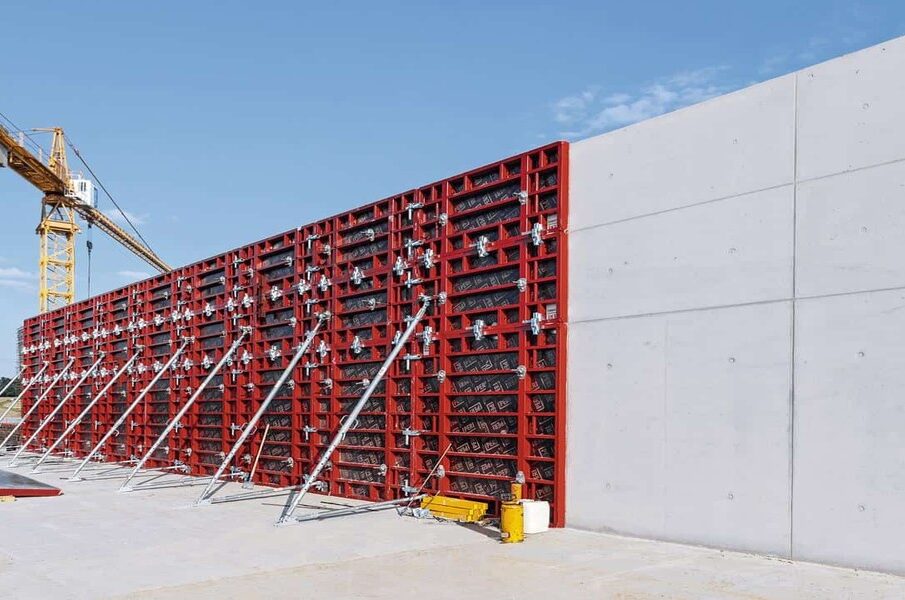
When the concrete is being poured and the clock is ticking, nothing is more critical than trusting the formwork beneath your feet. A miscalculation in load capacity turns a routine pour into a potential disaster. For commercial construction, temporary formwork is the unsung backbone that shapes every structure before vanishing from view. Yet, its strength and stability depend entirely on how accurately its load capacity is assessed.
Fundamentals of Load Capacity in Temporary Formwork
Defining Load Capacity: Key Concepts and Terminology
Load capacity is more than just a number on a chart. It represents the maximum weight that temporary formwork can safely support, including the self-weight of the formwork, fresh concrete, workers, and any equipment on top. Terms like dead load, live load, and impact load define what pressures the structure will face, while safety factors account for uncertainties.
Types of Loads Affecting Temporary Formwork
Formwork doesn’t only contend with fresh concrete. It must also handle equipment, vibrations, and sometimes the unpredictable, such as sudden weather changes or construction sequence variations. The main categories include:
– Dead Load: Weight of the formwork itself and permanent materials.
– Live Load: Workers, tools, machinery, and movement.
– Impact Load: Dynamic forces from equipment or dropped tools.
– Environmental Load: Wind, rain, or accidental flooding.
Importance of Accurate Load Capacity Assessment
A single weak link can lead to formwork collapse, risking project delays, injuries, and costly repairs. In commercial builds, the stakes are higher due to larger spans, heavier pours, and complex shapes. This is why teams rely on seasoned professionals and thorough assessments to ensure reliability.
Common Methods for Assessing Load Capacity
Empirical and Prescriptive Approaches
In some cases, traditional rules of thumb and tables guide formwork design, especially for straightforward layouts. These prescriptive solutions are distilled from decades of field experience and proven safety margins. However, as buildings have become taller and loads more complex, reliance on empirical methods alone has diminished.
Analytical and Calculation-Based Techniques
Today, structural engineers frequently use detailed calculations to determine load paths, maximum expected stresses, and required strengths. Analytical models account for every anticipated load and factor in material properties, geometric configuration, and construction sequence. For intricate projects, this method is essential.
Use of Software and Modeling Tools
Digital tools now play a pivotal role. Advanced modeling software allows engineers to simulate real-world scenarios, test different loadings, and visualize weak points before any material arrives on-site. These programs, when wielded by an experienced ingénieur étaiement NadeauSDM, enable rapid iteration while maintaining strict safety benchmarks.
Comparative Review of Temporary Formwork Systems
Comparing formwork options helps clarify how design choices affect load capacity and project outcomes.
| System Type | Typical Load Capacity | Flexibility | Cost |
|———————————–|—————————–|—————|————–|
| Timber Formwork | Moderate | High | Low-Medium |
| Steel Formwork | High | Medium | Medium-High |
| Modular (Prefabricated) | Consistent, High | Medium | Medium |
| Custom (Project-Specific Steel) | Very High (designed cases) | Low | High |
Timber offers versatility for unusual geometries but with lower capacities and more variability. Steel and modular systems boast higher, more predictable load-bearing performance, while custom solutions are reserved for the most demanding or unique structures.
Case Studies: Load Capacity Challenges in Commercial Building Projects
In multi-story commercial buildings, shoring systems must support not just the current pour but often multiple levels simultaneously. For instance, a typical multi-level pour may require a stack of shoring towers, each carefully calculated for cumulative loads.
When cranes or hoists are temporarily placed on fresh slabs, an added layer of analysis ensures that both the slab and its supporting formwork can resist concentrated weights and dynamic forces. Environmental concerns, such as seismic zones or high winds, further complicate these calculations, demanding specialized knowledge and continuous monitoring.
Standards, Codes, and Regulatory Frameworks
International standards, such as those from ACI and CSA, provide baseline requirements for formwork safety and load capacity. Local building codes may add further stipulations, especially for seismic or extreme weather zones. Ultimately, proof-testing and certification processes act as the final quality check before any pour begins.
Innovations and Best Practices in Load Capacity Assessment
Engineers today benefit from significant advances in material science, introducing high-strength alloys or composites that increase capacity without increasing weight. Real-time monitoring, using load cells, strain gauges, and wireless data feeds, enables instant detection of overloads or shifting conditions. Collaboration between designers, contractors, and specialists ensures risks are caught early and solutions are practical for the field.
Risk Management and Safety Implications
Every load capacity assessment is, at heart, a risk management exercise. Identifying points of potential failure, such as connections, supports, or transitions, is critical. Standard protocols call for staged load testing, ongoing verification during construction, and rigorous documentation. Competency of personnel, through training and certification, is equally vital for a safe project.
Strategic Decision-Making: Selecting the Right Formwork System
The best formwork system balances safety, performance, and budget. For some projects, a modular system streamlines labor and minimizes error; in others, a custom approach is the only answer. As commercial building trends push toward greater height, heavier loads, and architectural complexity, the science of load capacity assessment will only become more central. Relying on expertise, technology, and rigorous process ensures that every pour is a success, for both the builder and the future occupants.